
Saturday - October 10, 2026

ART MUMBAI Writes
Over the last four years, ART MUMBAI has become an anchor within the global art calendar, where galleries from around the world converge at the Mahalaxmi Racecourse. At its helm, Geetanjali Joshi looks back at how the fair has evolved and what she looks forward to during ART MUMBAI 2026, as well as giving us an inside look into the thought processes behind the decisions made.
You have been at ART MUMBAI since the first edition. Can you talk to us a little bit about the difference between 2023 and 2026?
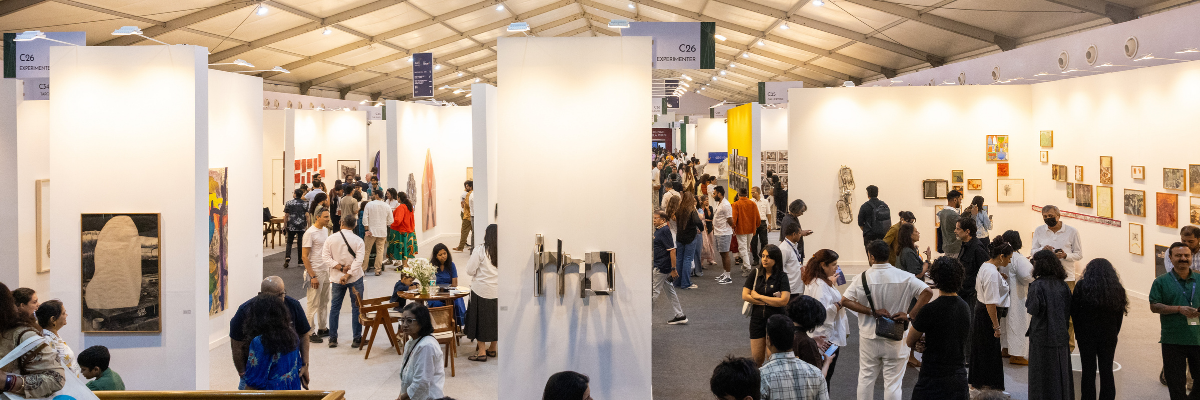
Geetanjali: We've evolved and scaled over the last 3 years massively, but not in a manner that has made our visitors and collectors feel lost. The fair still has a homey feeling to it, even though we've expanded from 53 exhibitors to 94 this year, with the addition of several foundations. It still has something for everyone, whether you are a seasoned collector or a new collector. A lot of our focus has been on bringing in people who may not come in thinking of buying something, but discover something within their wheelhouse. It's evolved in a manner that takes everyone into consideration and makes everyone feel like they have a place at the fair.
Tell us about the Exhibitor selection process. And specifically, what has strengthened this edition?
Geetanjali: Yeah, it's a really intensive process. We get so many applications that we're not able to accept all of them. A large part of them we aren’t able to take in even though they're very credible galleries with great artist representations. Our applications have been so strong that we've had to put a lot of effort into curating who we want to take in—thinking of who we want walking into the door and being able to say, "here's something for me".
ART MUMBAI is not only for collectors who've seen it all and been to fairs all over the world, but also for people in the city who haven't been to any other fairs outside Mumbai or Delhi. It's about discovering new artists, new galleries, and different forms of artwork. So, exhibitor selection is a challenging process, and while scale is important, it's equally important to maintain that distinction and quality year on year.
For the 2026 edition, we have added almost 20 galleries more than two years ago. Can you speak a bit more about what is being added to the fair experience by scale and depth?
Geetanjali: Absolutely, it's the breadth of representation and who's able to enhance the overall ecosystem—whether it's Indian galleries or international galleries coming in for the first time. This year we have six international galleries showing at the fair for the first time, out of which five have never shown in India before and chose ART MUMBAI to make their debut.
What does that mean for you as Associate Director—to have developed something where four years into its life, hugely reputable galleries from far away want their first exhibit in India to be at ART MUMBAI?
Geetanjali: It's huge, and it makes our team, and me, really proud. The international response was unexpected—we expected it over time, but not so soon. The demand from galleries in LA, the Middle East, Singapore, and all over has been phenomenal. It speaks highly to the evolving collector base in India, where collectors who have collected with Indian galleries for a long time are now looking for something fresh.
While it is exciting to have international galleries, what does it mean for ART MUMBAI to be a hub of the strongest Indian artwork and Indian galleries over the last four years?
Geetanjali: It's a place where someone can come to see the full diversity of Indian art—whether contemporary emerging artists, indigenous art, antiques, or galleries showing modern and pre-modern art under one roof. We love when people come in expecting to see the Husains and Razas, but then walk over to the contemporary side and discover a 20-year-old artist they love, starting their journey in collecting contemporary art. People return for a second or third day because there's so much to see across foundation displays and immersive artist setups.
What specifically are you excited about in terms of the art and programming this year?
Geetanjali: We've added really strong foundations showing collections and artists people haven't necessarily seen before. We also have a strong focus on emerging artists and younger galleries, especially since Mumbai speaks so well to the contemporary art market. I encourage visitors to come more than one day, take their time, and discover the full breadth of the fair.
Is there a lot of crossover between the 94 booths, or is each one unique?
Geetanjali: They are fairly unique. While there is naturally some crossover with galleries showing modern masters, the majority are distinct with no major overlap. Each gallery has a very focused ethos regarding the artists they represent, and I really encourage visitors to engage directly with the gallerists and artists present.
What do you want visitors to feel while walking through the hangars?
Geetanjali: I want them to feel like they are in a different world. We love when people say they were amazed and want to come back the next day to discover another gallery, a stage talk, or a sculpture. It's about being amazed, taking in all the creativity, and engaging in conversations with artists, curators, and fellow collectors.
Thank you so much for speaking to us.
Book Tickets to ART MUMBAI to see the art fair for yourself! Tickets are live on District