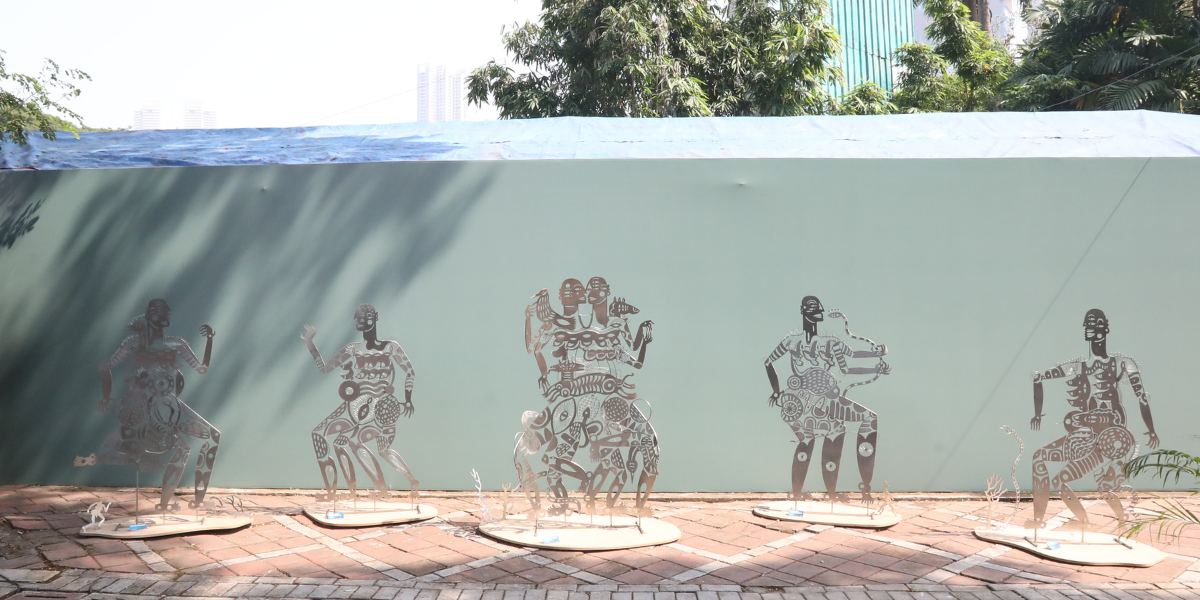
A highlight of ART MUMBAI 2026 is the indoor and outdoor Sculpture Park, where the fairgrounds themselves become a giant art exhibition. With a themed curation of sculptures by artists from South Asia and beyond, the Park takes the art viewing experience out of the gallery space, and shifts the conventional boundaries that separate art from viewer.
ART MUMBAI 2026’s Sculpture Park examines the relationship between Material and Memory.
From the inception of sculpture itself, material has been a medium that carries meaning and memory across generations. The Sculpture Park hosts sculptures made using a diversity of materials, that reflect a range of generations, contexts, geographies and intended meanings.
Time in sculpture becomes a crucial element that influences both material and memory. The Sculpture Park will showcase works that range across mediums such as clay, metal, fabric, and technology, to build an understanding of how mediums used in sculpture have evolved over the years.
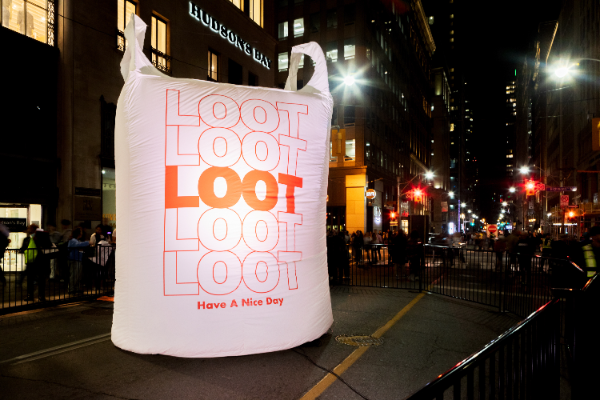
Divya Mehra, Night Gallery
A Practical Guide reimagines the ubiquitous “THANK YOU” plastic bag as a monumental inflatable sculpture, replacing its familiar message of gratitude with the repeated word “LOOT.” Derived from Hindi, the term was appropriated and weaponized by the British Empire, evoking histories of colonial plunder and extraction. Originally installed outside the Hudson’s Bay Company headquarters in Toronto, Canada the work draws attention to one of North America’s oldest colonial corporations, granted a royal charter in 1670 that enabled the exploitation of Indigenous peoples and their lands through the fur trade. Through its exaggerated scale and absurd, almost comic presence, Mehra transforms an everyday object associated with commerce into a pointed reflection on accumulation, dispossession, and resistance. Presented in the Sculpture Park at Art Mumbai 2026, the work takes on renewed significance as the word “loot” returns to its linguistic and historical context, complicating questions of colonial extraction, cultural ownership, and reclamation.
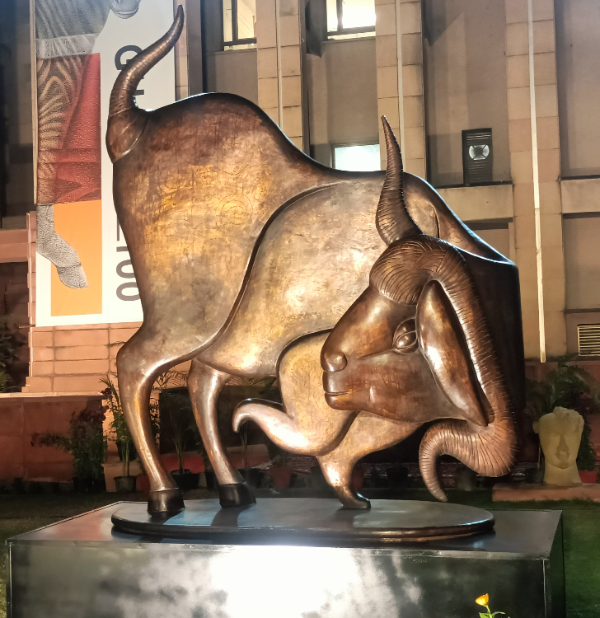
Shri Satish Gujral, Gujral Foundation
A heavy, solitary bull that symbolizes strength, devotion and unwavering faith—a testament to human endurance. This sculpture is shown as part of the Gujral Foundation’s centenary retrospective, The Modernist Returns: Satish Gujral 100.
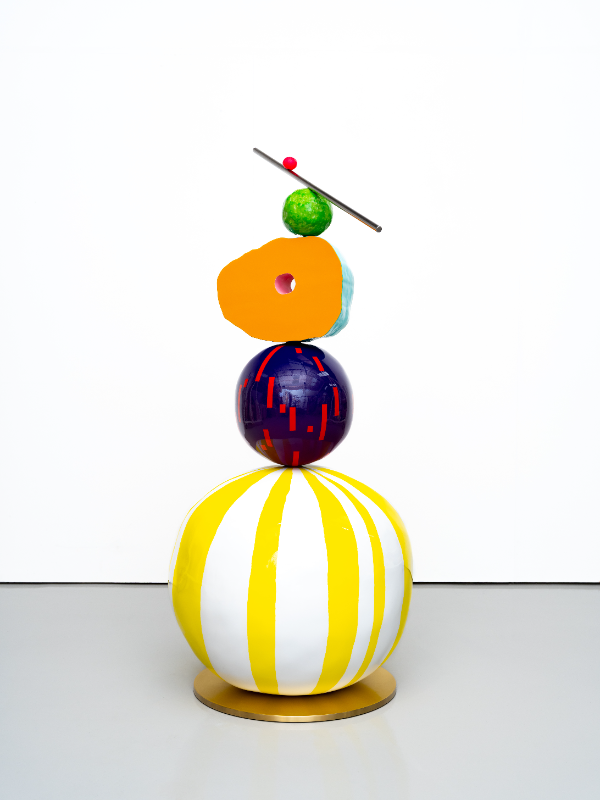
Jonathan Trayte, Akara Contemporary
This hybrid fruit-and-candy form uses bright, overwhelming colours, drawn from global food packaging, to comment on excess and conspicuous consumption, with a wry nod to the climate crisis.
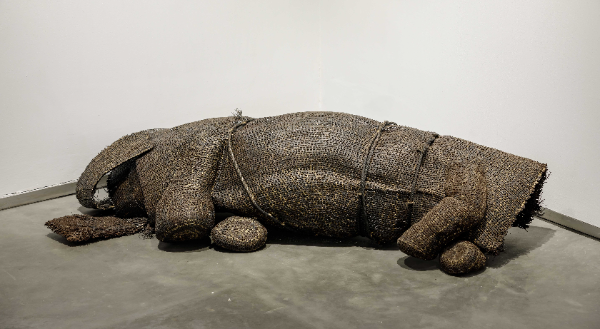
Sakshi Gupta, Experimenter
Sakshi Gupta’s sculpture resembles a rolled-up carpet, with an animal tied up within. Here, animal and container merge into an ambiguous hybrid that blurs the line between living and inanimate.
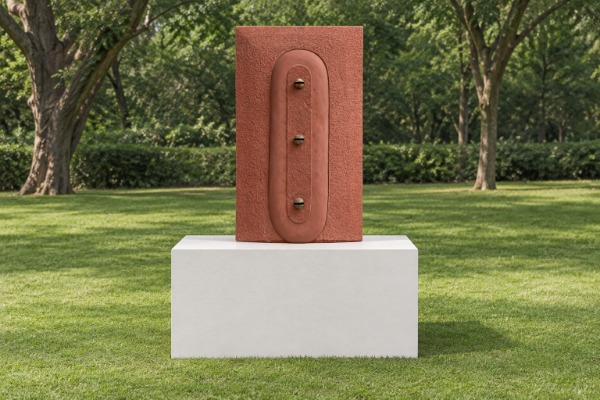
Nagji Patel, Akar Prakar
Nagji Patel’s artwork was inspired by temple sculpture and folk carvings, where he has distilled the essence of form through stone work and restrained approach.
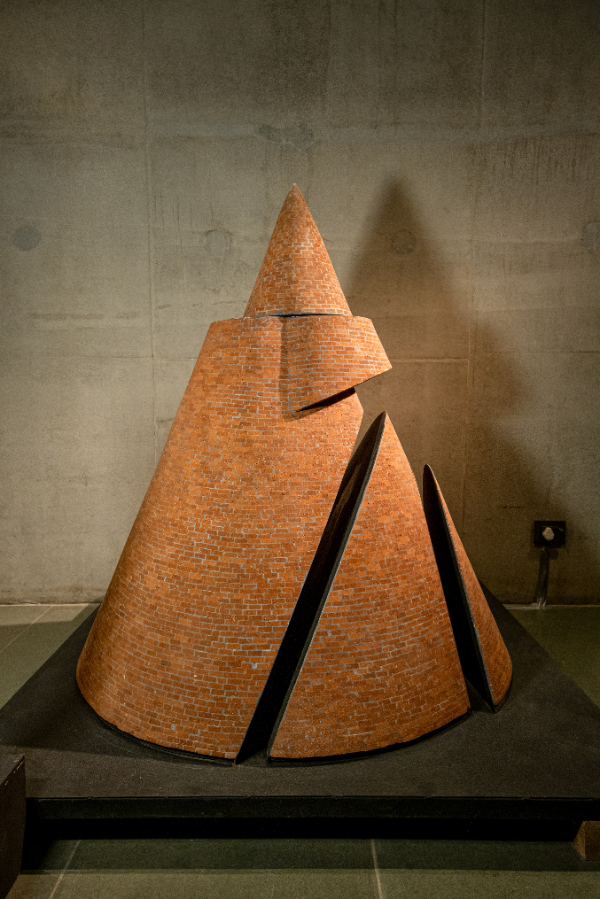
Teja Gavankar, Indian Ceramics Triennale
Two cones partially merge and shift into each other, in a "not this, not that" reckoning of identity and unity. It is Gavankar’s first work with a motion and electronic system, and invites viewer participation.
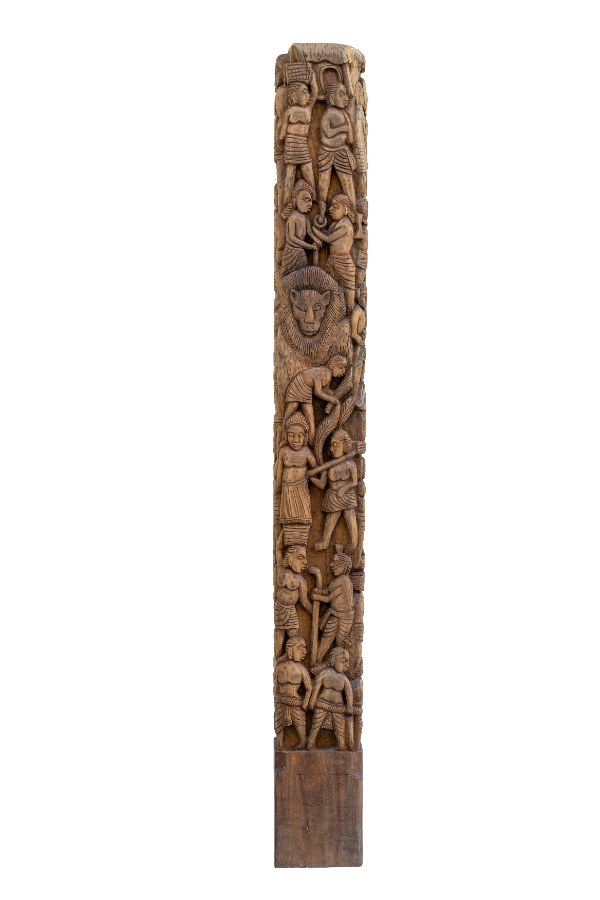
Pandi Ram Mandavi, Ojas Art
Mandavi’s Stories Retold is a collection of carvings, drawn from forest life, folklore and tribal deities, where each figure is a character that invites viewers to imagine, interpret and retell local stories.
Vyom, 079 | Stories Art Gallery
Vyom imagines a forest spirit who acts as a moral compass and regulator, rather than a guardian, asking what happens when real natural conservation is replaced by the agents that excuse exploitation.
Pors and Rao, TARQ
This spring-mounted, motorised bench trembles when someone steps in front of it, in a comic, nervous motion. The sculpture explores the idea of responsiveness, where motion in one place reverberates through others.
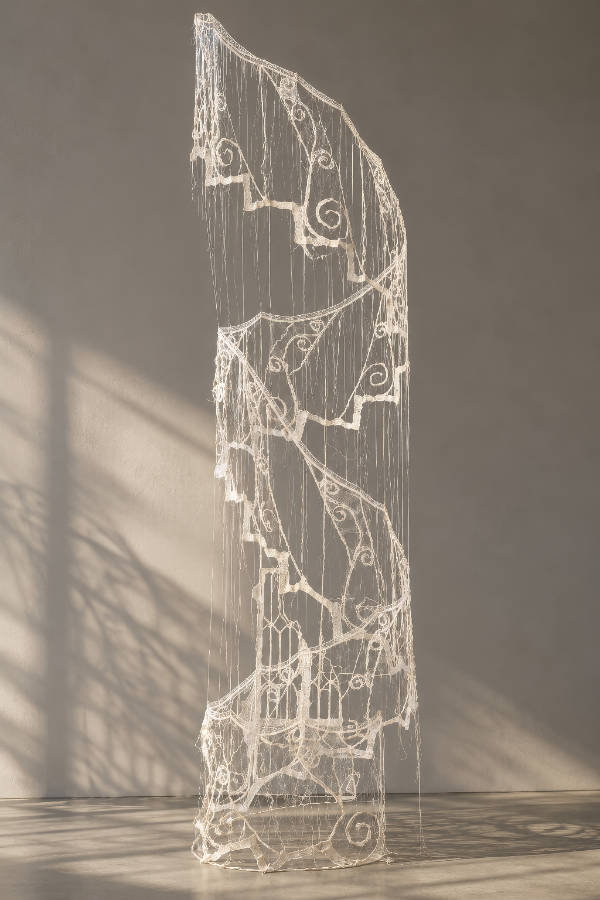
Sumakshi Singh, Exhibit 320
Singh has created a life-size spiral staircase made of white thread that hovers weightlessly, with half-formed patterns on each step, simultaneously capturing ideas taking form and dissolving back into string.
Sajid Wajid Shaikh, Alembic Foundation
Shaikh’s house-like structure has a twisted geometry that prevents habitation, an illusion of home that is recognisable but impossible. It reflects on displacement and how systems of power make the right to a home fragile and uncertain. Production support from Method.